Junkers Ju 87 - Stuka :: [Part 3 of 5]
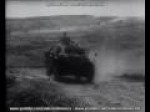
The Junkers Ju 87 or Stuka (from Sturzkampfflugzeug, "dive bomber") was a two-seat (pilot and rear gunner) German ground-attack aircraft of World War II. Designed by Hermann Pohlmann, the Stuka first flew in 1935 and made its combat début in 1936 as part of the Luftwaffe's Condor Legion during the Spanish Civil War.
The aircraft was easily recognizable by its inverted gull wings, fixed spatted undercarriage and its infamous Jericho-Trompete ("Jericho Trumpet") wailing siren, becoming the propaganda symbol of German air power and the Blitzkrieg victories of 1939-1942. The Stuka's design included several innovative features, including automatic pull-up dive brakes under both wings to ensure that the plane recovered from its attack dive even if the pilot blacked out from the high acceleration. Although sturdy, accurate, and very effective, the Ju 87 was vulnerable to modern fighter aircraft, like many other dive-bombers of the war. Its flaws became apparent during the Battle of Britain—poor manoeuvrability, lack of speed and defensive armament meant that the Stuka required a heavy fighter escort to operate effectively.
The Stuka operated with further success after the Battle of Britain, and its potency as a precision ground attack aircraft became valuable to the German war effort in the Balkans Campaign, the African and Mediterranean Theatres and the early stages of the Eastern Front campaigns where Allied fighter resistance was disorganised and in short supply. However, once the Luftwaffe had lost air superiority on all fronts the Ju 87 once again became easy targets for enemy fighter aircraft. In spite of this, and lacking a successor, the type continued to be produced until 1944. By the end of the conflict the Stuka was largely replaced by ground attack versions of the Focke-Wulf Fw 190, but some units, like Sturzkampfgeschwader 2 "Immelmann" operated the Ju 87 to the last day of the war. An estimated 6,500 Ju 87s of all versions were built between 1936 and August 1944. Hans-Ulrich Rudel was the most notable Stuka ace and was the most highly decorated German serviceman of the Second World War. He received the highest German military award, the Ritterkreuz mit Goldenem Eichenlaub, Schwertern und Brillianten, or the Knight's Cross with Oak Leaves, Swords and Diamonds in Gold, on 29 December 1944.
Author: andersonlamarca
Keywords: Luftwaffe Junkers Ju-87 Stuka dive bomber Hermann Pohlmann Hans-Ulrich Rudel Condor Battle Britain Fighter Aircraft Airplane Plane German Fighters 2nd World War WW2 Nazi Nazis Adolf Hitler Germany Berlin Messerschmitt Me 262 Volksjager Entwurf Heinkel He 162 Arado Ar 234 163 Horton 18 Focke-Wulf Goring Speer Tempelhof BMW Mercedes-Benz Rolls-Royce Kestrel British England London USA US America Air Force Allies Europe Italy Regia Aeronautica Mussolini
Added: February 1, 2009
|